


Exploring the Culinary Heritage of My Hapa Haoles with Filipino, Swedish, Portuguese, German, and Irish Dishes #EattheWorld

The Eat the World group is celebrating its centennial post. I definitely haven't posted 100 times, but I love this group. And I was especially tickled to see the prompt that Wendy - of A Day in the Life on the Farm - posted. "Let's commemorate this by celebrating our individual heritages. Please share a recipe from the country where you were born or where your ancestors called home."

As both of my parents are from the Philippines, I think that would be a pretty short post. So I decided to explore the culinary heritage of my hapa haoles with Filipino, Swedish, Portuguese, German, and Irish dishes. Here's the rest of the crew's offerings...
The Culinary Heritage Line-Up
Exploring the Culinary Heritage of My Hapa Haoles with Filipino, Swedish, Portuguese, German, and Irish Dishes by Culinary Cam (you're here)
French Canadian Meatball Stew by A Day in the Life on the Farm
Upvasache Pattice by Sneha's Recipe
Zucher Kuka by Amy's Cooking Adventures
R's Cultural Art Project (2012)

Fourteen years ago, when he was in the fifth grade, R's teacher gave them an assignment during the 'Who I Am' unit of inquiry: to represent their ethnic identity in an art project. My kid made a 3D dodecahedron (or something) with flags and photos on the sides to show: 50% Filipino, 12.5% Swedish, 12.5% Portuguese, 12.5% German, and 12.5% Irish. So that's the list I'm going with today for my recipes that explore our family's cultural heritage.
My Hapa Haoles

We have always had conversations about their heritage though the most common label we use is "hapa haole." Now I know that some people find that term insulting; we do not. Hapa just means 'half' - usually Hawaiian or some variation of a Pacific Islander - and haole means 'white.'
Certainly people could sling that monkier with vitriol, but it's just an accurate description in the case of my boys. Half. White.
I was fascinated by this passage in Six Days in Bombay: A Journey Through Art and Identity—Unraveling Secrets Across Europe in the Wake of a Painter's Death by Alka Joshi. It was about how two different women viewed their half-ness: "There was a major difference between us, even in our half-half heritage, however. She considered her otherness a source of pride. She flaunted it, like a peacock’s train. It made her special. It made her an artist. A painter. I, on the other hand, wore my otherness like a scratchy blouse that I couldn’t wait to take off at the end of the day."
I don't think that either of my duo feels like the latter. But I am not sure.
Filipino Dishes
Despite their claim that I am a disgrace as a Filipina as I speak neither our family's dialect nor the national language - and that they are only half-disgraces - I do actually make Filipino food for them. I have made and posted: Ginataang Seafood, Lugaw, and Sinigang.
I taught them, and several friends, how to roll lumpia. In fact, they both rolled lumpia with their college friends in Santa Cruz and Berkeley.

But the recipe I'm sharing for the 50% of their heritage is...
Cassava Bibingka
I made this for a Filipino dinner party last year to celebrate Pia's 53rd birthday. Cassava Bibingka is on the right half of that dessert platter. I didn't make the suman on the the left side.

Ingredients
makes 8" x 8" pan
1 pound bag grated cassava (I found this frozen at an Asian market), defrosted
3/4 cup evaporated milk
1/2 cup granulated sugar
1/4 butter, softened
2 eggs
1/2 cup coconut cream
1/4 cup sweetened condensed milk
Also needed: 8" x 8" baking dish, parchment paper
Procedure
Preheat oven to 350 degrees Fahrenheit. Line a baking dish with parchment paper and set aside.
Whisk together the butter, eggs, and sugar until smooth. Fold in the remaining ingredients - except the sweetened condensed milk - until well-combined.
Spoon into prepared baking dish. Bake for 35 minutes.
Remove pan from oven and spoon the sweetened condensed milk over the top. Return the pan to the oven and bake for another 10 minutes. Remove from the oven and let cool for at least one hour before slicing. Slice into bite-sized pieces. Enjoy!
Swedish Dishes

My mother-in-law is half Swedish, so Jake is a quarter, and the boys are one-eighth. I have previously shared Svenska Kottbullar (Swedish Meatballs) and Pannkakor (Swedish Pancakes). But today I am sharing a treat that Swedes might make for Midsommar.
Most of the people I know who actually celebrate Midsummer - marking the summer solstice - are northern Europeans. So, I decided to look at Swedish traditions honoring my mother-in-law's ethnic background. We don't get to see her as often as we'd like, but I figured this was a nice way to honor her heritage.
Midsommar celebrations in Sweden were held to herald in summertime and the celebrate the season of fertility. In some parts of the country, people dressed up as ‘green men' by draping themselves in ferns and other greenery. They decorated their houses and farm tools with foliage, and raised leafy maypoles around which they danced.
Midsummer Night, being the summer solstice, is the lightest and longest day of the year. In Sweden and other parts of northern Europe it is considered a magical night and a night for foreseeing people’s futures. It is said that girls devoured salted porridge before bedtime and whoever, in their dreams, brought them water to quench their thirst was their future husband. Also, it was said, water was turned into wine and ferns into flowers for midsummer.
The cornerstones of a good midsummer are freshly picked flowers, such as daisies and clover. There's a legend that if you pick seven kinds of flowers and put them under your pillow on Midsummer's Eve, you'll dream of the person you're to spend your life with. The Midsommar feast table is always heavy on seasonal and local foods.
Fläderblomsglass (Elderflower Ice Cream)

Every summer we spend some time in the Eastern Sierras with my in-laws and my mother-in-law, sister-in-law, and I head out to pick the blossoms. I try to preserve the flavor as I only get the flowers once a year.
Ingredients
Ice Cream
4 cups organic heavy whipping cream
2 cups milk
1/3 cup organic granulated sugar
1/3 cup elderflower simple syrup (recipe below)
10 egg yolks
1/2 teaspoon salt
zest from 1 organic lemon
1 teaspoon freshly squeezed lemon juice
4 Tablespoons elderflower liqueur (I used homemade, but you can use St. Germain or another brand)
Also needed: ice cream machine, ice
Elderflower Simple Syrup
2 cups elderflower blooms, destemmed
1-1/2 cups water
1-1/2 cups organic granulated sugar
Procedure
Elderflower Simple Syrup
Place water and sugar in a medium sauce pan. Heat to a simmer, swirling until the sugar crystals are completely dissolved. Stir the flowers into the syrup and press down so that they are completely submerged.
Remove from heat and let steep until the syrup is completely cooled. Strain out the flowers and pour the syrup into a clean lidded jar. Refrigerate until ready to use.
Ice Cream
Pour cream and milk into a medium saucepan. Whisk in the sugar and salt. Heat over a medium heat on the stovetop.
Separate egg yolks. Whisk to break up and set aside.
When the milk-cream mixture begins to steam, temper the yolks. Slowly pour in 1/2 cup of the warm milk-cream mixture while whisking. Once tempered, you can pour the egg yolks into the saucepan. Stir constantly until the custard thickens and coats the back of a spatula. As it's thickening, add in the lemon zest, lemon juice, and 2 Tablespoons elderflower liqueur.
When custard is thickened, stir in the remaining 2 Tablespoons elderflower liqueur. Remove custard from the heat into place it into an ice bath. Stir it occasionally and, when cool enough, press a piece of plastic wrap across the surface of the custard to prevent a skin from forming. Allow it to finish cooling, then let it rest in the refrigerator overnight - or for at least 8 hours.
When ready to churn, follow the manufacturer’s recommendations for the use of your ice cream machine. One of my best friends let me use hers while we were at her house for a dinner party. This made a little more 2 quarts in 25 minutes.
Without a Machine?
If you don't have an ice cream machine, or have access to one, whip your custard for 4 to 5 minutes and transfer to an ice cream container. Press a plastic wrap into the top and freeze. Remove the mixture from the freezer every 30 minutes or so an break up the crystals with a fork. Return to the freezer and repeat until the mixture is thoroughly frozen, approximately 2 to 3 hours.
Portuguese Dishes

As my heritage accounts for 50% of the boys' ethnic background, all the rest of this comes from Jake's side. They are 12.5% Portuguese as my mother-in-law's dad was from Portugal. I have made and shared Amêijoas à Bulhão Pato, Bife à Portuguesa, Caldo Verde, and Malasadas, filled doughnuts that came to Hawaii via Portuguese immigrants.
For this post I am sharing Carne de Porco à Alentejana today because I love the flavor profile - the briny seafood, meaty pork, and smoked paprika.
Carne de Porco à Alentejana

Carne de Porco à Alentejana is a classic dish from Portugal's Alentejo region that uniquely combines marinated pork with clams. This dish is traditionally served over a bed of cubed, fried potatoes or the potatoes can also be added to the meat and clams during cooking!. Lemon wedges and optional pickles often accompany the dish, refreshingly contrasting the robust flavors.

Ingredients
1 Tablespoon smoked paprika
2 Tablespoon sweet paprika
1 teaspoon hot paprika
1 teaspoon ground turmeric
2 pounds boneless pork loin, cubed
½ cup white wine vinegar
2 bay leaves
2 Tablespoons olive oil
3 garlic cloves, peeled and minced
1 organic white onion, peeled and chopped (approximately 1 cup)
3 Tablespoons olive oil
2-3 Tablespoons tomato paste
1 cup dry white wine
1 Tablespoon fresh oregano leaves
2 pounds clams, scrubbed
2 pounds fingerling potatoes, boiled
2 Tablespoons butter
freshly ground salt
freshly ground pepper
fresh organic lemon wedges for serving, optional
fresh cilantro for serving, optional

Procedure
In a bowl, make a paste with the paprikas, turmeric, garlic, and 2 Tablespoons olive oil. Place the pork cubes into a deep bowl. Add the paprika and garlic paste to the pork and massage it into the meat with your fingers. Add in the bay leaves and vinegar. Cover the bowl and allow to marinate between 8 and 24 hours. The longer the better! Massage the meat every 4 to 6 hours. Let the meat come to room temperature before you start cooking.
Heat 3 Tablespoons olive oil in Dutch oven or other deep pot with a tight-fitting lid. Add in the marinated pork, setting aside the marinade for later. Brown the pork on all sides in a single layer, cooking it in batches if needed. Once all the pork has browned, reduce the heat to medium low and toss in the onion and and allow it to brown slightly, approximately 2-3 minutes.
Pour in the wine and deglaze the bottom of the pan. Stir in the tomato paste and the rest of the pork marinade. Let it simmer for at least 10 minutes.
Add the pork back into the pan; the pork should be mostly covered in the sauce. If it needs more liquid, add in some chicken stock or water. Stir in the fresh oregano leaves. Bring the liquid to a boil. Reduce heat to low and cover with a lid. Allow the meat to braise for 1 ½ hours to 2 hours.
Once the pork is tender, bring the liquid back up to a gentle boil. Add the clams to the pot, nestling them in between the meat and mostly covered by the sauce. Cover and cook an additional 20 minutes.
While the clams are steaming in the pork and sauce, prepare the potatoes. Start with boiled potatoes that are easily pierced with a fork, but still firm.
Melt butter in a skillet. Add in the potatoes and cook until golden brown all over, approximately 5 to 6 minutes.
To serve, please a few potatoes in a shallow bowl. Ladle the pork, clams, and sauce over the top. Add wedges of lemon and cilantro leaves for garnish and serve with crusty Portuguese bread. Bom apetite!
German Dishes

We aren't totally sure what my father-in-law's complete heritage is. At some point, the boys landed on German and Irish. Okay. We'll run with that. I have shared Käsknöpfle (from Lichtenstein) which is very similar to German Käsespätzle, Bavarian Pretzels, and Chicken Thigh Schnitzel which is similar in process and therefore German-adjacent as far as I am concerned.

But I decided to share what that I made to go with a Schweineschnitzel dinner at our friends' house a couple of years ago. Daryl lived in Germany at least twice when his dad was stationed there in the military; and he showed me how to make an authentic pork schnitzel.
I shared this recipe recently for my Movies and Munchies groups when we (re)watched Ferris Bueller's Day Off. See that post here: Schweineschnitzel + Silvaner for Von Steuben Day. It would go well with homemade...
Simple Sauerkraut

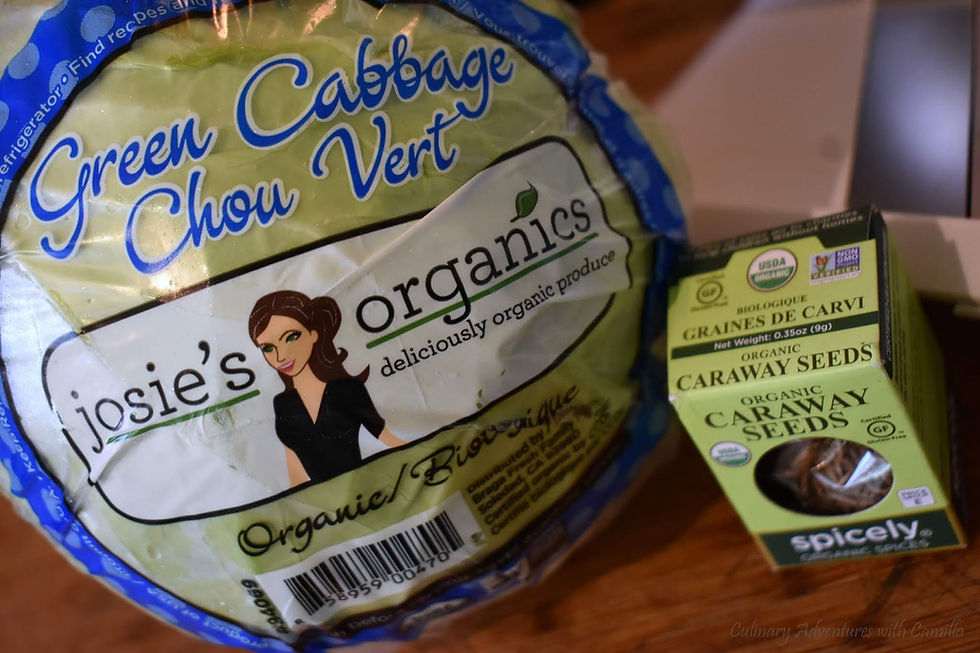
This sauerkraut needs to ferment for between 3 to 10 days; this version was 7 days. And...it was a hit! There are very few ingredients. The only things that I would suggest having to make your life easier: a mandolin slicer, glass fermentation weights, and a vegetable tamper. I use mine all the time! But you don't need them to make this recipe. They just make this process easier.
Ingredients
2 medium cabbage heads, prefer organic
2 Tablespoons sea salt
1 Tablespoon caraway seeds
Also needed: mandolin slicer, vegetable tamper, quart jar with seal and clamp

Procedure
Use a mandolin slicer to cut cabbage. I ended up with about 9 or 10 cups.
Place cabbage and salt together in a large mixing bowl. Massage the cabbage and salt together with your hands, as if you're making a massaged kale salad. When the cabbage has become limp and releases some of its juice, transfer into jar or jars.
Pack the salted cabbage into the jars as tightly as you can, eliminating air bubbles. This is when I use the vegetable tamper.
Continue packing the cabbage into the jar until the cabbage is completely submerged by liquid. Gently drop in the glass fermentation weights and press down so that the cabbage and the weight are completely covered by the liquid. Mine has a good 1/2" to 3/4" above the weight to start.
Now allow it to sit at room temperature, undisturbed, for at least three days. You can open it up and press down on the glass weight to expel even more liquid. Once it's to your liking, move the sauerkraut to the refrigerator. Seven to ten days of fermenting is usually perfect.
Irish Dishes

Look at my lil' leprechauns! We are going with Irish being the last 12.5% of the boys' ethnic make-up. I have previously shared A Hang Sangwidge, Irish Beef Guinness Stew, and Irish Banger Skillet.
The recipe I am sharing for their Irish roots is a Dublin Coddle.
Dublin Coddle

I was inspired by this package of Irish style Bangers I picked up at the market. I was just going to make bangers and mash or the Irish Breakfast that Holly eats at her neighborhood diner. Then I came across mention of a Dublin coddle - not in the book - and knew that my trio would love it. Who doesn't like potatoes, sausage, onions, and bacon!??

Ingredients
serves 4
2 pounds potatoes (I used large Yukon gold)
water
1 large onion, peeled and thickly sliced
1 pound Irish sausage
1/4 pound ground bacon or bacon roughly chopped
1-1/2 cup beef stock plus more if needed
1/4 pound bacon cooked crisp and crumbled
freshly ground salt, to taste
freshly ground pepper, to taste
Procedure
Simmer the sausages in water until cooked then cook them in oil just enough to give them color. Set aside.
Place the potatoes in a large pot, covered with water. Bring to a boil and cook until you can pierce them with a fork. They don't need to be cooked completely because they will be braised later. Once they are cool enough to handle, slice into thick coins.
Preheat the oven to 300 degrees Fahrenheit.
In a large heavy pot with a tight lid - I used my Le Creuset braiser - cook the ground or chopped bacon until the fat is rendered and the meat cooked through. Layer the potato coins around the pan on top of the bacon.
Season the potatoes with salt and pepper. Place the onions on top of the potatoes, followed by the grilled sausages. Pour the stock mixture over the top. On the stove, bring the liquid to a boil. Immediately turn the heat down and cover the pot.
Put the covered pot in the oven and let everything braise for at 90 minutes. After an hour, check the pot to make sure that it hasn't dried out. Add more stock, if needed. Put it back in the oven until the potatoes are creamy and the onions are soft.
To serve, crumble the cooked bacon over the top and serve immediately. Traditionally you would serve this with a Guinness for supper.
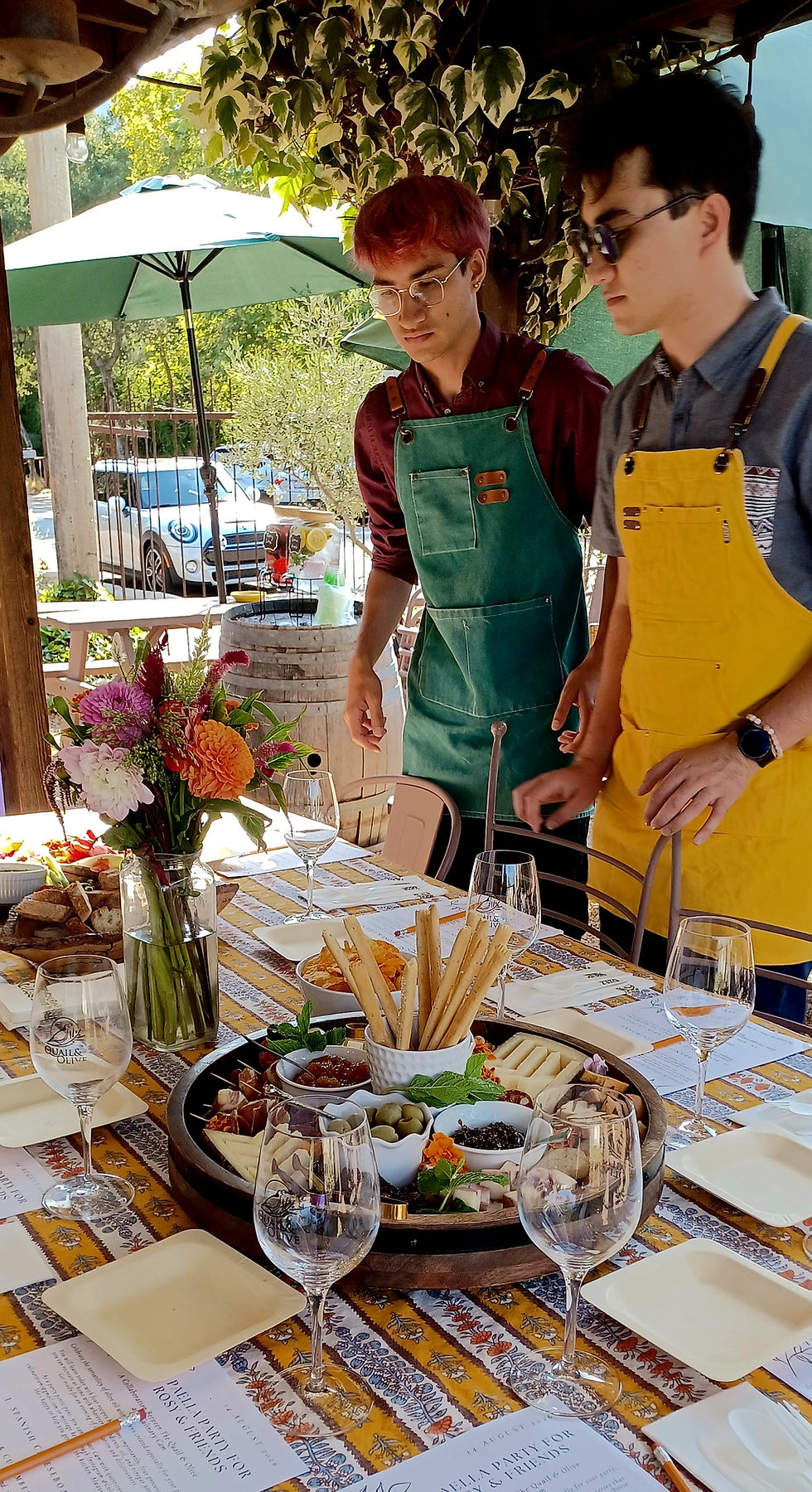
That's a wrap on my around-the-world recipe round-up for my boys' ethnic background. They are always up for some culinaty adventuring. I just adore these two hapa haoles!
The group will return next month with another destination. Stay tuned!
And if you are interested in all of the previous ninety-nine posts, check out my round-up. 100 Months of Eat the World!


What a rich heritage you have inherited from maternal, well as marital, loved reading the post and enjoyed seeing all those beautiful dishes you have put togather
What a fun and comprehensive post Cam. Some great recipes celebrating your boys.